
We clarified critical dimensions, edge rules, surface requirements, and required documentation before programming began.
Case study • CTQ evidence • Export-ready delivery
Case Study: Medical Tooling in Stainless Steel (Documentation‑Heavy)
An anonymized example showing how SEMIX supports medical manufacturing tooling with controlled machining, CTQ inspection evidence, and documentation aligned to approval-driven workflows.
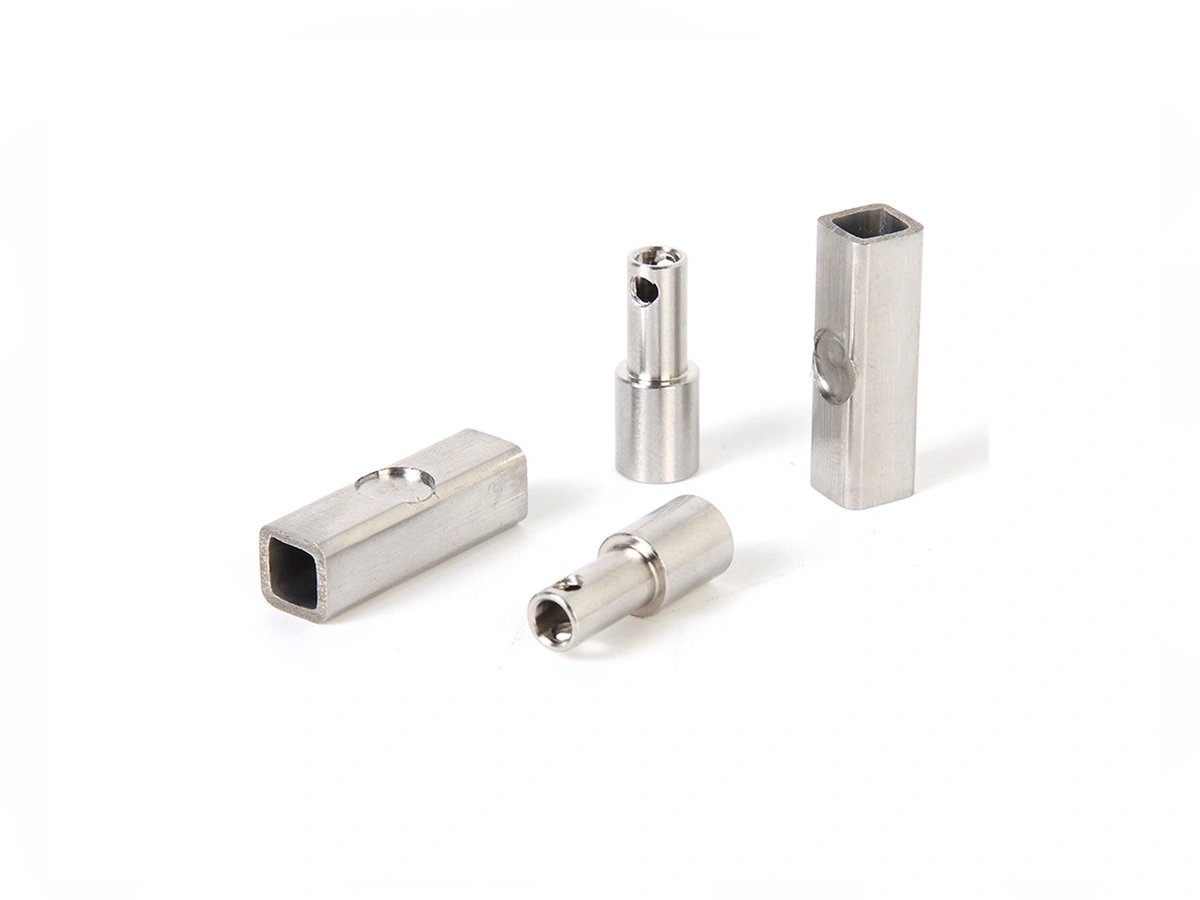
Program snapshot
Customer: Medical manufacturing supplier (customer name withheld)
Part family: Tooling components used in device manufacturing and assembly (non-implant)
Material: Stainless steel (corrosion resistance + durability requirements)
Key needs: burr control, surface condition, and documentation clarity for approvals
| Requirement | Why it matters | SEMIX approach |
|---|---|---|
| Edge/burr control | Sharp edges can damage components and reduce assembly yield | Deburr rules confirmed early; consistent finishing route |
| Surface condition | Surface quality affects cleaning, wear, and assembly behavior | Toolpath planning + controlled finishing expectations |
| Evidence & traceability | Approval-driven workflows require clear proof of conformance | CTQ inspection report + CoC; MTR when required |
| Field | Details (public) |
|---|---|
| Material / finish | Stainless steel |
| Size envelope | Anonymized (available under NDA) |
| Qty range | Prototype to low-volume programs (anonymized) |
| CTQ focus | Approval-driven workflows require clear proof of conformance |
| Tolerance & verification | Tight/critical features verified on CTQ-focused report (ranges shared under NDA) |
| Lead time | Quoted per RFQ; schedule aligned to customer gate dates (ranges under NDA) |
| Evidence pack | CTQ report • CoC • material/finish certs (as applicable) • packaging notes |
Challenge
Stainless tooling parts are often sensitive to burr formation, heat, and surface finish variation. The buyer’s approval workflow required evidence that critical dimensions and surface requirements were controlled.
- Burr risk: stainless can create stubborn burrs that must be controlled consistently
- Finish variability: surface condition must be repeatable to support cleaning and use
- Documentation expectations: approval teams need clear, structured evidence
- Change sensitivity: small changes can require re-approval if not communicated
Why stainless steel is common in medical tooling
Many medical manufacturing tooling and assembly components use stainless because it offers corrosion resistance, durability, and stable performance in cleaning environments. From a machining perspective, stainless can be less forgiving than aluminum—burr control, tool wear, and surface finish need more attention. That’s why a clear edge rule and surface requirement in the RFQ is essential for predictable results.
Approach
SEMIX aligned the machining plan to the approval workflow: confirm requirements early, control edges and surfaces, and deliver evidence that maps to what the buyer cares about.
We selected a route that avoids unnecessary variability—protecting key fits and controlling surface condition.
Deburr expectations were aligned (break edges vs specific radii) to ensure consistent assembly behavior.
Inspection focused on the features that drive approvals and downstream yield, delivered in a receiving-friendly format.
Resources: Precision machining in Vietnam and Documentation packages.
Evidence delivered
For medical manufacturing programs, evidence must be clear and consistent. SEMIX delivered documentation aligned to the buyer’s requirements.
- CTQ dimensional report aligned to approval features
- CoC linked to PO and revision
- MTR provided when required by specification or PO flow-down
- Packaging notes to protect surfaces and maintain part condition
See: Inspection & metrology.
Risk controls used on stainless tooling
To keep stainless tooling parts consistent across lots, SEMIX focuses on practical controls that reduce variability:
We confirm how edges should be treated (break edges, chamfer, radius) and which edges are functional or cosmetic.
We align handling and packaging rules to protect surface condition so parts arrive ready for use and inspection.
Measurement methods are aligned to the CTQs to provide credible, repeatable evidence.
If revisions occur, we confirm which dimensions and documents are impacted before the next build.
Quality pages: Quality overview and ISO 9001 QMS.
RFQ checklist for medical tooling components
To speed up quoting and reduce approval friction, include the following with your RFQ:
- 2D drawing + 3D model with a clear revision level.
- CTQs identified for approval and functional features.
- Surface and edge requirements including cosmetic zones, deburr rules, and any “no-mark” surfaces.
- Documentation package required (CoC, inspection report, MTR if applicable).
- Packaging expectations to protect surfaces during shipping.
Outcome
The program demonstrated how SEMIX supports documentation-heavy parts: clarify requirements early, stabilize the machining route, and deliver evidence the approval team can use. This reduces back-and-forth, accelerates approvals, and protects schedule for both prototype and repeat orders.
Outcome highlights
Evidence formatted for receiving review; CTQs highlighted to reduce back-and-forth.
CTQ inspection plan executed; CoC and required certs packaged with the shipment.
Delivery and documentation aligned to the customer’s internal gate / PO flow-down.
Takeaway for buyers
When documentation is part of the product, define the evidence package during RFQ—before the PO is released. That is the fastest way to prevent delays and mismatched expectations.
Deep dive (technical briefs)
If you want the engineering rationale behind the controls used in this program, start with these related briefs from our Technical Academy:
-
AS9102 First Article Inspection | Build a FAIR Package That Passes Receiving
Practical AS9102 approach for aerospace CNC suppliers: ballooning strategy, characteristic accountability, evidence pack design, change triggers, and how to reduce receiving rejections with buyer-proof FAIR documentation.
Read the full brief
-
Gauge R&R for High‑Precision CNC | Practical Execution (NIST‑Aligned)
How to design Gauge R&R for tight-tolerance machining: artifact selection, fixturing, temperature discipline, CMM strategy, and actions that improve measurement reliability for U.S./EU buyer programs.
Read the full brief
-
Decision Rules with Measurement Uncertainty | ISO 14253‑1 + ILAC G8 + GUM
Applied guide to uncertainty-based decision rules: guard bands, false accept/reject risk, and dispute-proof statements of conformity for precision CNC machining suppliers serving U.S./EU buyers.
Read the full brief
-
Acceptance Sampling for Machined Parts | ANSI/ASQ Z1.4 vs Z1.9
Applied acceptance sampling for CNC machining: when to use ANSI/ASQ Z1.4 (attributes) vs Z1.9 (variables), how switching rules work, and how to align sampling with CTQ risk for U.S./EU buyers.
Read the full brief
Evidence patterns (technical case studies)
Incident-style write-ups that show how SEMIX handles common failure modes and prevents receiving disputes:
-
Case Study (Aerospace): Late‑Batch Reject Spike | Wear‑Driven Regime Change
Rejects appeared late in the batch. Root cause was wear-driven cutting regime change shrinking stability margins. Fix used wear gating plus EWMA/CUSUM drift detection.
Read the case
-
Case Study (Semiconductor/Vacuum): Flatness Dispute Solved | Thermal State + Decision Rules
Flange flatness passed at supplier but failed at customer. Root cause traced to thermal-state mismatch and missing uncertainty-based decision rules. Includes corrective actions and reporting template.
Read the case
Documentation templates (print-to-PDF)
Want consistent receiving-ready evidence? These templates show typical formats SEMIX can provide with shipments (redacted samples available under NDA):
-
Certificate of Conformance (CoC) template
Buyer-friendly CoC with clear scope, drawing revision reference, and statement of conformity.
Open template
-
Inspection plan (CTQ) template
Characteristic table with method, sampling, decision rules, and reaction plans—built for high-trust programs.
Open template
-
Final inspection report template
A report structure that reduces disputes: conditions, CTQ highlights, and declared decision rules.
Open template
-
Packaging & shipping checklist template
Packaging spec, label control, photos, and shipment signoff for export-ready delivery.
Open template