
Preview sample formats for CoC, CTQ inspection reports, and packaging checklists.
ISO 9001 QMS • Inspection evidence • Export-ready delivery
4‑Axis Machining in Vietnam
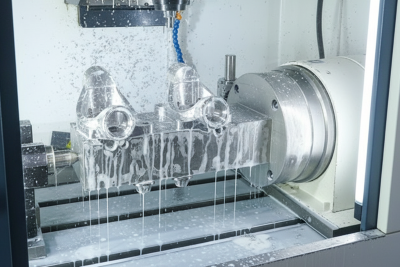
4‑axis machining in Vietnam to reduce setups and protect relational accuracy on multi‑face parts. Ideal for housings, brackets, fixtures, and complex interfaces.
Precision machining
5-axis capable
Inspection reports
Export-ready packaging
Proof
Evidence you can request at RFQ
4‑axis reduces clampings; the proof is relational feature control and an inspection report that matches receiving expectations.
Overview
What you get with SEMIX
4‑axis machining is ideal when parts require multiple faces to be machined with strong relational accuracy, but full 5‑axis simultaneous machining is not required. It reduces re-clamping error, supports stable inspection planning, and often improves cost and lead time.
Why 4-axis
When 4‑axis machining is the best fit
4‑axis machining adds a rotary axis to reduce setups for multi‑side parts. It’s often the sweet spot between 3‑axis simplicity and 5‑axis complexity.
- Multi-side features without full simultaneous 5‑axis needs.
- Better relational accuracy by reducing re-clamping and datum shifts.
- Efficient cycle time for parts with repeated angled features or patterns.
Typical parts
Common 4‑axis part types
Side holes, pockets, and patterns that must stay aligned to primary datums.
Tooling with features around multiple faces where setup reduction improves accuracy and cost.
Planning
Fixturing, datums, and inspection
4‑axis success comes from planning. SEMIX builds a manufacturing plan that connects datums, workholding, tool access, and inspection method.
- Datum strategy that protects relational accuracy across rotated faces.
- Tool access review to prevent long reach tools and vibration risk.
- Inspection plan aligned to CTQs and reporting needs.
RFQ checklist
Information that speeds up quoting
Accurate quotes require clear inputs. Use this checklist to reduce back‑and‑forth and shorten the time to a production‑ready plan.
- NDA (optional but supported) — sign your NDA or ours before file sharing.
- 2D drawing + 3D model (PDF + STEP/IGES), including revision level.
- Material and condition (grade, temper/heat treatment).
- Finish requirements (standard, color, thickness, masking).
- Quantity and schedule (prototype vs production, blanket PO, target ship date).
- Documentation (CoC, MTR, inspection report, first‑article package).
- Packaging (labeling, serials, kitting, clean handling).
Related insights
Learn more (Vietnam sourcing + DFM)
FAQ
Service questions
When should I choose 4-axis machining instead of 5-axis?
Choose 4‑axis when most features can be accessed by indexing around one rotary axis and you mainly need setup reduction—not continuous tool angle freedom.
Does 4-axis machining improve positional accuracy?
Often yes. Fewer re‑clamps typically means less cumulative alignment error, which helps hold relational tolerances across faces.
What files do you need to quote 4-axis machining in Vietnam?
A 2D PDF + 3D STEP/IGES, revision, CTQs, material/finish, quantity, and required inspection/reporting scope.
How do you plan inspection for multi-face 4-axis parts?
We align datums and CTQs early, then select measurement methods (CMM/fixtures) appropriate for the positional requirements and reporting expectations.
Can 4-axis reduce total cost vs multiple 3-axis setups?
Often yes, but it depends on geometry and CTQs. During RFQ we compare routing options to recommend the best total cost route.
Do you provide documentation packages for 4-axis work shipped to USA?
Yes. CoC, material certs when required, dimensional reports/first-article support as required. See Documentation.
Do you support NDAs for customer CAD data?
Yes. NDA-first workflows are supported via RFQ.
Related resources
Services → Guides → RFQ (recommended path)
These pages help U.S., Europe, and global buyers qualify a Vietnam CNC machining supplier faster, prepare quote-ready data, and align documentation requirements before production.
When 5-axis is worth it (setup reduction vs complexity).
How to decide and what to send for quoting.
RFQ data that speeds up quoting.
CTQ-based inspection planning and reporting.
Receiving-ready evidence and certificates.
NDA-first supported. Start here.
Buyer resources
4-axis machining resources
When 3-axis is enough, when 4th‑axis wins, and how to think about datums, clamps, and repeatability.
High‑impact geometry fixes that reduce cost, lead time, and rework risk before you cut metal.
Datum strategy, flatness control, and CTQ reporting—built for receiving and assembly.
Next step
Request a quote for this service
Send your drawing and requirements. We will confirm assumptions, highlight risks, and propose a manufacturing plan that meets your CTQs.