
Preview sample formats for CoC, CTQ inspection reports, and packaging checklists.
ISO 9001 QMS • Inspection evidence • Export-ready delivery
Semiconductor Equipment Machining
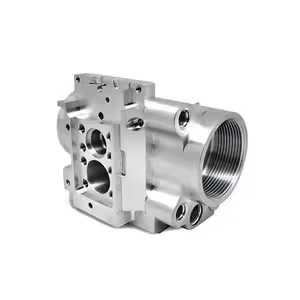
Semiconductor equipment machining in Vietnam: fixtures, plates, brackets, vacuum and thermal interfaces—built around flatness, cleanliness, and documented inspection evidence.
Precision machining
5-axis capable
Inspection reports
Export-ready packaging
Proof
Evidence you can request at RFQ
Semiconductor programs emphasize cleanliness, handling, and flatness/position CTQs. These links show how SEMIX controls those risks.
Where SEMIX helps
Semiconductor machining programs that demand repeatability
Semiconductor equipment is sensitive to alignment, surface condition, and contamination risk. Machined hardware often sits inside high‑value tools where downtime is expensive.
- Tooling and fixtures for alignment, calibration, handling, and assembly
- Precision plates and brackets requiring stable datums and positional control
- Housings and covers where fit, sealing, and surface condition matter
- Prototype to production hardware with controlled revision and documentation
Materials & finishes
Materials common in semiconductor equipment hardware
Typical materials include aluminum, stainless steels, and engineering plastics, selected based on environment, corrosion needs, and surface requirements.
- Aluminum for lightweight structures and anodized surfaces
- Stainless steel for corrosion resistance and durability
- Engineering plastics for insulating, wear, and fixture components
Quality & documentation
Evidence that supports equipment uptime
To support qualification and receiving, SEMIX can provide documentation packages aligned to your PO flow-down. Many semiconductor buyers prioritize inspection evidence on alignment and interface features.
- CTQ inspection planning for datums, flatness, positional control, and critical mating features
- Dimensional reports structured for receiving and engineering approval
- Revision control for NPI programs with frequent changes
- Packaging options to protect surfaces and reduce damage risk
FAQ
Semiconductor machining questions
Do you support NDAs for semiconductor programs?
Yes. NDA-first workflows are supported. Start with RFQ and we can execute NDA before file sharing.
Can you machine engineering plastics for semiconductor tooling?
Yes. Provide material spec, CTQs, and environment requirements so we can plan clamping and dimensional control.
Can you support repeat production after prototypes?
Yes. We support prototype learning cycles and then stabilize processes for repeat production lots.
Semiconductor case studies
These programs are anonymized, but the workflow is real: CTQ planning, inspection evidence, and receiving-ready documentation.
Flatness‑critical fixture plate with CTQ evidence and export-ready delivery.
Sealing groove features + flatness CTQs for tool-build applications.
Engineering plastic fixture component with burr control and clean handling.
Small batch kit with labeling and documentation to reduce receiving friction.