
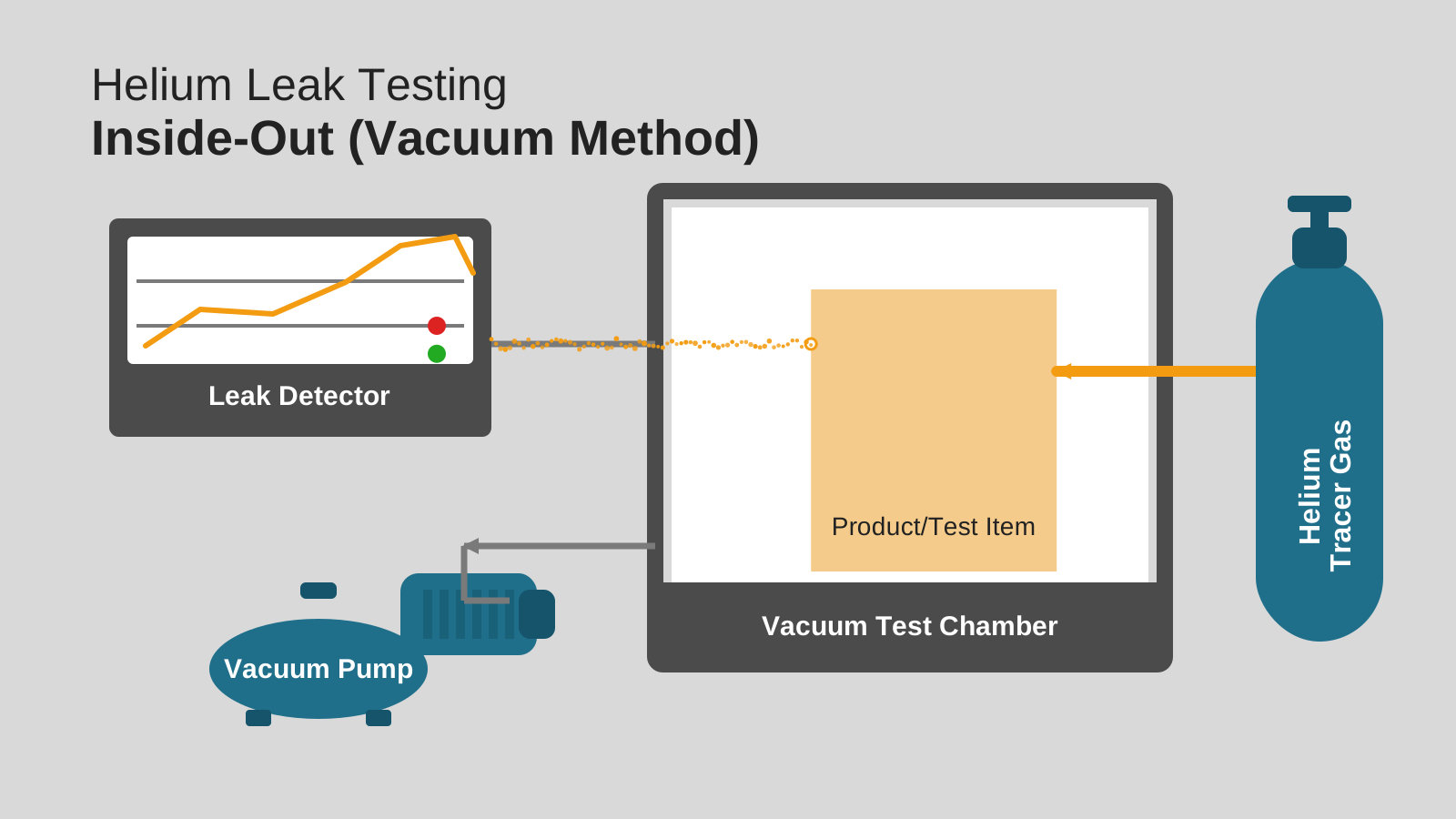
Symptom
Leak-test results showed:
- inconsistent failures across identical parts
- retests passing without any part change
- operator-dependent results
Investigation
A disciplined leak-test investigation treated the test as a measurement system:
- Measure fixture blank baseline (no part) to quantify background signal.
- Verify detector response using a standard leak at start and end of sessions.
- Standardize stabilization/dwell time before readings.
- Inspect fixture sealing surfaces and lines for micro-leaks.
Root cause
The dominant contributors were:
- elevated background helium in the test environment
- fixture micro-leaks and seal degradation
- inconsistent dwell/stabilization time between operators
In short: the test setup dominated the signal more than the part did.
Corrective actions
- Require fixture baseline within limits before testing any part
- Standard leak verification at defined intervals
- Locked dwell/stabilization timing and reporting format
- Fixture maintenance schedule and seal replacement policy
- Clear retest policy and containment rules for borderline cases
Evidence produced
- Baseline logs showing background control over time
- Standard leak verification records
- Reduced false-fail rate after corrective actions
- Updated method statement for repeatability and customer correlation
Buyer takeaway
If a supplier cannot show background control, fixture verification, and a repeatable method statement, leak results cannot be trusted—regardless of the detector brand.
FAQ for buyers
- What causes false leak-test failures?
- How often should fixture baseline and standard leak checks be run?
- What does a credible leak-test report include?