
Redacted layout showing CTQ callouts, datums, and how pass/fail is stated.
Case study • CTQ evidence • Export-ready delivery
Case Study: PEEK Fixture Components (Burr‑Free + Fit‑Critical CTQs)
This page combines two disclosure‑safe PEEK fixture component programs—one for semiconductor tool assembly and one for a medical test/assembly workflow. Across both, the critical theme was the same: burr/particle control, dimensional stability, and evidence that makes receiving predictable.
Program snapshot
Details are anonymized and simplified for customer disclosure safety.
Program A — Semiconductor tool assembly fixture
- Customer: Semiconductor sub‑system supplier (U.S. program; name withheld)
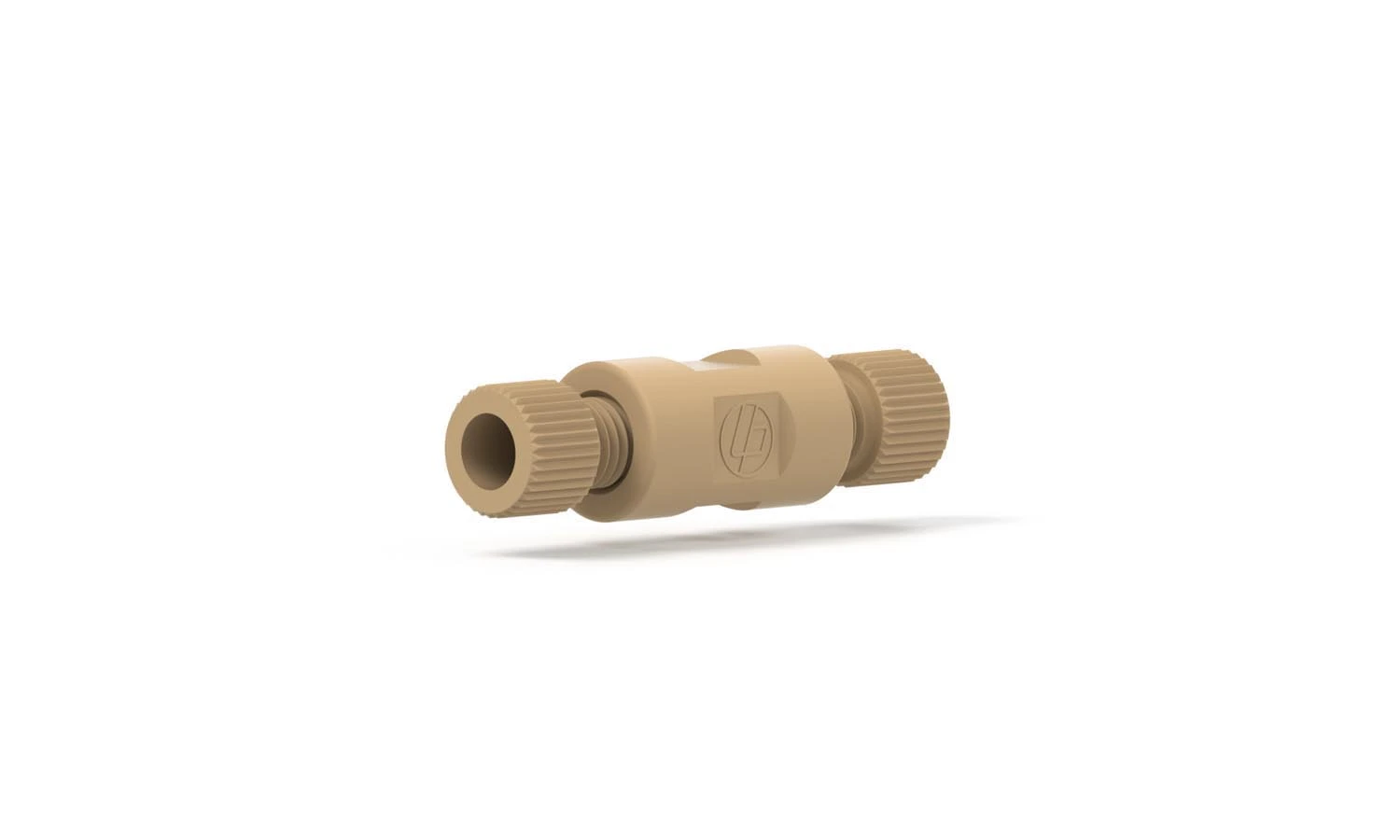
- Part: PEEK fixture / insulator used near sensitive assemblies
- Primary risks: burrs/particles, handling contamination, dimensional drift that shows up at assembly
- SEMIX role: plastics‑DFM feedback, machining execution, CTQ inspection evidence, and clean packaging
Program B — Medical test/assembly fixture component
- Customer: Medical manufacturing / test team (U.S. program; name withheld)
- Part: PEEK fixture component used in a test or assembly process
- Primary risks: burrs at functional edges, fit drift across lots, and revision mix‑ups at receiving
- SEMIX role: machining approach for edge/burr control, CTQ inspection plan + report, and export‑ready packaging
| Field | Details (public) |
|---|---|
| Material / finish | PEEK |
| Size envelope | Anonymized (available under NDA) |
| Qty range | Prototype to low-volume programs (anonymized) |
| CTQ focus | Datums + functional features (CTQs defined at RFQ) |
| Tolerance & verification | Tight/critical features verified on CTQ-focused report (ranges shared under NDA) |
| Lead time | Quoted per RFQ; schedule aligned to customer gate dates (ranges under NDA) |
| Evidence pack | CTQ report • CoC • material/finish certs (as applicable) • packaging notes |
What changed between programs
- Clean handling emphasis vs. edge/burr emphasis: both programs needed burr control, but the semiconductor program added stricter cleanliness and handling expectations.
- Inspection framing: both used CTQ-focused reporting, but the medical program leaned harder on fit‑critical repeatability and clear pass/fail phrasing for receiving.
- Packaging & labels: both required revision control; the medical workflow highlighted mix‑up prevention, while the semiconductor workflow highlighted contamination protection.
Key requirements
| Area | Requirement |
|---|---|
| Material | Engineering plastic (PEEK) with careful handling and chip control |
| Edges / burrs | Burr-free requirements with consistent edge treatment (as specified) |
| Dimensional stability | Critical dimensions verified after machining to ensure fit and alignment |
| Cleanliness | Packaging to reduce contamination risk during transit and receiving |
| Documentation | CTQ inspection report + revision traceability |
How we executed
SEMIX approached the build as a controlled workflow: confirm CTQs, plan measurement methods, and prevent revision drift.
- DFM review for plastics: confirmed toolpath strategy to avoid heat buildup and surface smearing.
- Edge strategy: defined how edges would be treated to meet “no burr” expectations (documented).
- Controlled machining: executed with attention to chip evacuation and feature integrity.
- CTQ verification: inspected fit-critical dimensions and reported results in a receiving-friendly format.
- Clean packaging: packaged to protect surfaces and minimize contamination exposure.
Quality evidence and documentation
To make receiving easy for a U.S.-based program, we shipped with evidence aligned to CTQs and revision control.
- CTQ inspection report focused on fit/alignment features
- CoC referencing material and revision
- Packaging notes for handling and cleanliness expectations
- Revision traceability across quote/PO/build
Evidence pack preview (redacted)
On request, we can share redacted examples of the exact report formats our U.S. buyers receive—so your receiving team knows what to expect.
Revision- and PO-linked CoC format used for receiving acceptance.
Redacted packaging notes for protection, labeling, and kitted shipments (if applicable).
Outcome
- Assemblies fit without rework due to focus on fit-critical CTQs
- Receiving friction reduced because documentation was complete and revision-aligned
- Stable edge treatment prevented downstream handling issues
Outcome metrics are anonymized. The point is the workflow: stable routing, CTQ measurement, and receiving-ready documentation.
Outcome highlights
Evidence formatted for receiving review; CTQs highlighted to reduce back-and-forth.
CTQ inspection plan executed; CoC and required certs packaged with the shipment.
Delivery and documentation aligned to the customer’s internal gate / PO flow-down.
Deep dive (technical briefs)
If you want the engineering rationale behind the controls used in this program, start with these related briefs from our Technical Academy:
-
Outgassing Control for Vacuum Hardware | ASTM E595 + Materials Governance
Deep applied guide to outgassing for vacuum and semiconductor-adjacent hardware: ASTM E595 screening metrics (TML/CVCM), residue pathways in machining, bake strategy, and packaging/materials governance.
Read the full brief
-
Product Cleanliness for Machined Parts | ISO 14644 & IEST‑STD‑CC1246
Applied contamination control for CNC machined parts: specify cleanliness levels, control particle sources, verify by extraction, and design packaging/handling workflows for semiconductor-adjacent supply chains.
Read the full brief
-
Packaging Qualification for Precision Machined Parts | ASTM D4169
Applied packaging engineering for global shipping: ASTM D4169 distribution hazards, no-contact packaging design, corrosion control, and qualification evidence to prevent shipping-induced defects.
Read the full brief
-
Decision Rules with Measurement Uncertainty | ISO 14253‑1 + ILAC G8 + GUM
Applied guide to uncertainty-based decision rules: guard bands, false accept/reject risk, and dispute-proof statements of conformity for precision CNC machining suppliers serving U.S./EU buyers.
Read the full brief
Evidence patterns (technical case studies)
Incident-style write-ups that show how SEMIX handles common failure modes and prevents receiving disputes:
-
Case Study (Semiconductor): Particle Fail After Transit | Burr Latency + Packaging Micro‑Motion
Parts passed dimensional and visual checks but failed particle extraction after transit. Root cause was latent burr fracture and packaging-induced micro-motion. Includes corrective actions and evidence pack.
Read the case
-
Case Study (Semiconductor/Vacuum): Flatness Dispute Solved | Thermal State + Decision Rules
Flange flatness passed at supplier but failed at customer. Root cause traced to thermal-state mismatch and missing uncertainty-based decision rules. Includes corrective actions and reporting template.
Read the case
Documentation templates (print-to-PDF)
Want consistent receiving-ready evidence? These templates show typical formats SEMIX can provide with shipments (redacted samples available under NDA):
-
Certificate of Conformance (CoC) template
Buyer-friendly CoC with clear scope, drawing revision reference, and statement of conformity.
Open template
-
Inspection plan (CTQ) template
Characteristic table with method, sampling, decision rules, and reaction plans—built for high-trust programs.
Open template
-
Final inspection report template
A report structure that reduces disputes: conditions, CTQ highlights, and declared decision rules.
Open template
-
Packaging & shipping checklist template
Packaging spec, label control, photos, and shipment signoff for export-ready delivery.
Open template