
Executive takeaway
“Clean” has two different meanings:
- air cleanliness in a controlled environment (ISO 14644)
- product cleanliness of the part itself (IEST CC1246 style)
A supplier can work in a clean room and still ship a dirty part if burr latency, packaging, and handling are not controlled.
ISO 14644‑1: air cleanliness (not product cleanliness)
ISO 14644‑1 classifies cleanrooms and clean zones by airborne particle concentration.
Use it to:
- define the environment for final clean/pack steps
- justify controlled areas for particle-sensitive parts
Do not use it alone to claim the part itself meets a cleanliness level.
IEST‑STD‑CC1246: product cleanliness logic
IEST CC1246 provides a basis to specify and verify contamination levels on products. The critical idea:
- cleanliness must be defined with a measurable method, not just a statement.
Why machining produces “latent contamination”
Even when parts look clean:
- micro-burrs break during shipping and release metallic debris
- trapped coolant/oil in blind holes later migrates out
- packaging friction generates particles
- handling introduces fibers
The worst offenders are:
- edge exits, cross holes, thread roots, thin webs, and porous cast surfaces.
How to write a cleanliness requirement that works
A buyer-grade cleanliness requirement includes:
- Target cleanliness level (what is acceptable)
- Critical surfaces/volumes (what must be clean)
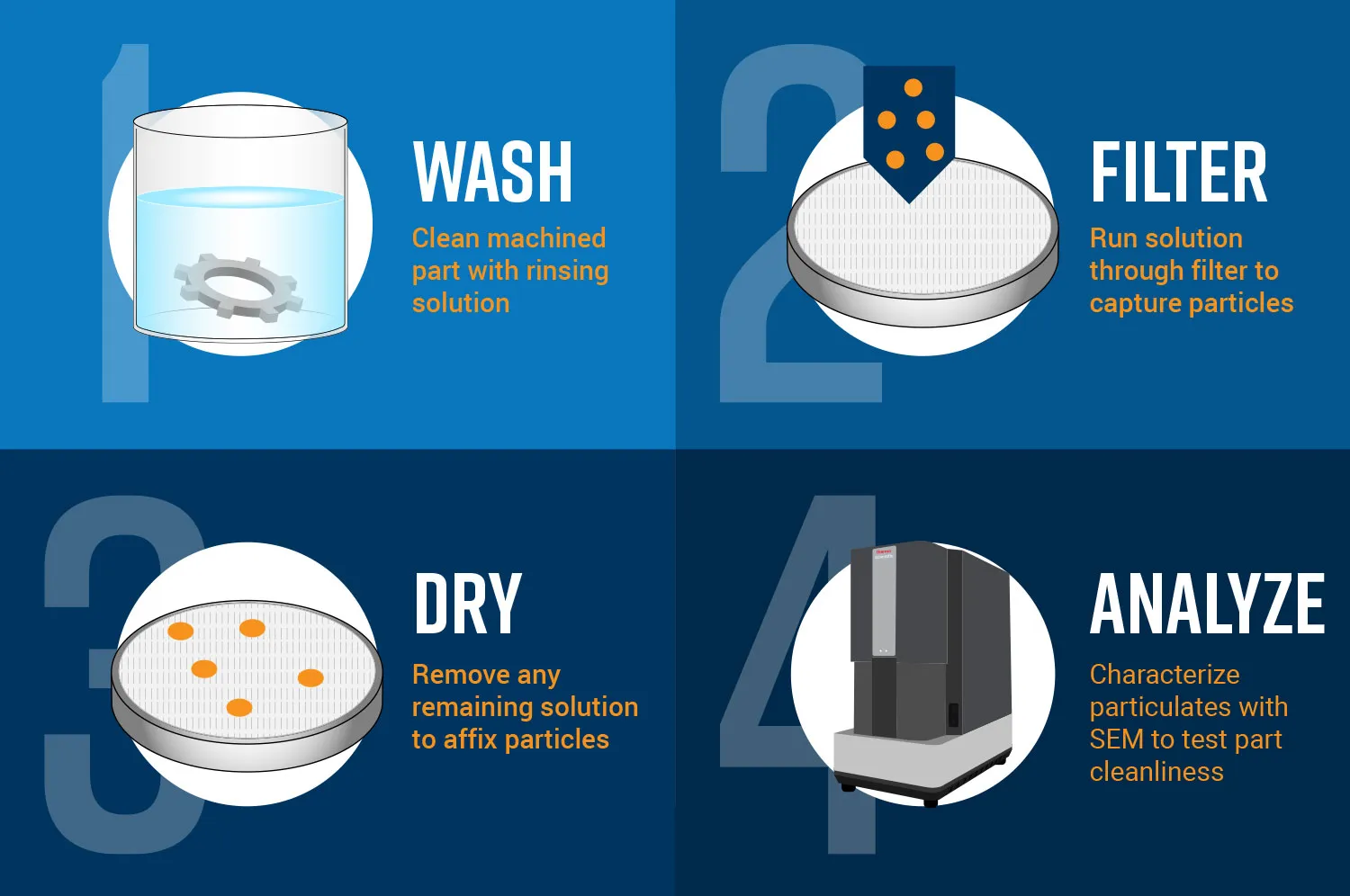
- Verification method:
- extraction (rinse/agitate/ultrasonic as appropriate)
- filter capture
- microscopy or particle counting
- Packaging requirements:
- no-contact separators
- low-shedding materials
- sealed protection and labeling discipline
- Handling rules after clean (gloves, time-to-pack)
Verification strategy (production-friendly)
- Validate the clean process on representative worst-case geometry.
- Establish periodic verification frequency based on risk.
- If a customer performs their own extraction:
run a correlation study and align methods (agitation energy, solvent, time).
Control plan
- Burr control gates (edge break spec + verification)
- Cleaning process validation and change control
- Packaging qualification (vibration/fretting risk)
- Training and audit records for clean handling
Buyer evidence pack
- Cleanliness specification sheet and method statement
- Verification reports and trend records
- Packaging and handling SOP
- Change control: oils, cleaners, packaging materials, and outside processes
FAQ for buyers
- Why do particles appear after shipping?
- Can a part be “visually clean” but fail extraction?
- How do you specify cleanliness without overpaying for unnecessary cleanroom class?
- What evidence demonstrates cleanliness control for semiconductor-adjacent hardware?