Best for prismatic parts and multi-face geometry.
ISO 9001 QMS • Inspection evidence • Export-ready delivery
CNC Milling vs Turning: How to Choose the Right Process
Milling vs turning: choose the right process based on geometry, CTQs, and cost drivers—especially when outsourcing CNC machining to Vietnam.
Precision machining
5-axis capable
Inspection reports
Export-ready packaging
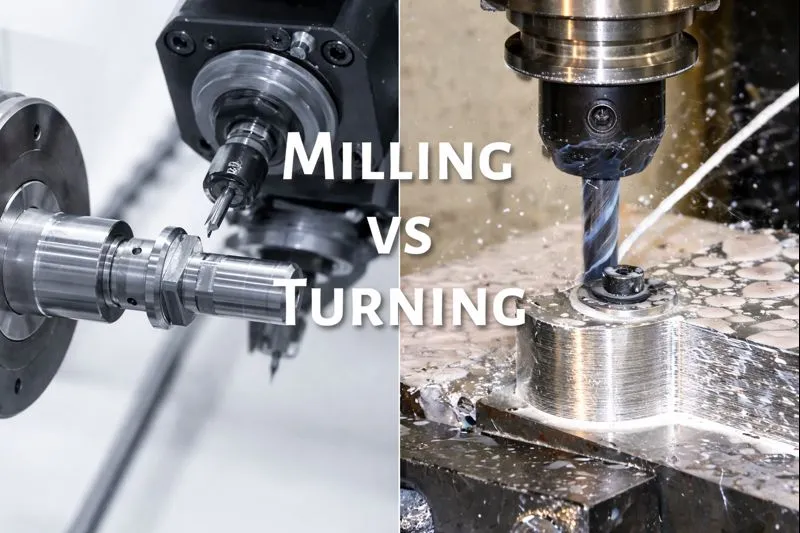
CNC milling vs CNC turning: learn how to choose the right process, reduce cost, and plan tolerances and inspection when sourcing machining in Vietnam.
Core differences between milling and turning
The easiest way to think about it:
- Turning is best for rotational parts (shafts, sleeves, pins) where concentricity and diameters are critical.
- Milling is best for prismatic parts (plates, brackets, housings) with pockets, patterns, and multi-face features.
Some parts require both. The best route depends on CTQs and geometry.
When milling is the best fit
- Part is mostly prismatic (flat faces, pockets, rectangular shapes)
- Multiple faces require patterns/holes/pockets
- Relational accuracy between faces is critical
When turning is the best fit
- Part is primarily rotational
- Diameters, bores, and concentricity drive function
- Surface finish on cylindrical features is critical
When turn‑mill or multi-axis makes sense
Hybrid routes can reduce setups and improve positional control:
- Rotational part with flats, slots, or cross holes
- Part requiring angled features or complex geometry
- High relational accuracy requirements across multiple features
In some cases, 4-axis or 5-axis milling is the best solution.
DFM tips that reduce cost
- Avoid unnecessary tight tolerances on non-functional features
- Use practical radii for milled pockets
- Reduce setups by designing for stable workholding and access
- Specify surface requirements only where needed
Related SEMIX pages
Internal links to help you move from guide → service selection → RFQ.
Next step
Talk to a Vietnam CNC machining partner
If you want quote-ready feedback (DFM notes, routing recommendations, documentation options), send your drawing and requirements.